
Cleanroom Manufacturing for Medical Converting: How ABLE’s ISO-Certified Processes Support Healthcare Innovation
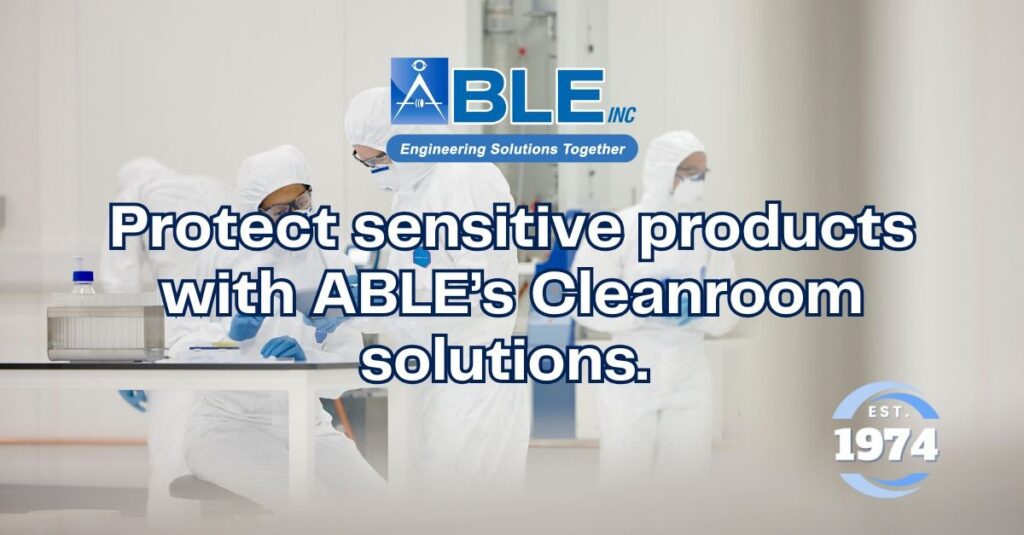
Medical device manufacturers operate in one of the most highly regulated industries in the world. Whether producing wearable health monitors, wound care products, diagnostic devices, or advanced medical technologies, there is little room for error when it comes to quality, consistency, and contamination control.
As healthcare technologies become more sophisticated, the demand for precision-manufactured components continues to grow. Cleanroom manufacturing and medical converting provide the controlled environments and precision processes needed to meet these evolving demands. At ABLE, cleanroom manufacturing is supported by robust quality systems, including ISO 13485 and ISO 9001 certifications.
What Is Cleanroom Manufacturing?
Cleanroom manufacturing refers to production conducted within a highly controlled environment where particle levels, temperature, humidity, and contamination are carefully monitored and regulated. This controlled setting minimizes dust, microorganisms, and other contaminants that could affect the quality, reliability, or performance of the finished product.
Cleanroom environments typically include:
- High-efficiency air filtration systems
- Controlled temperature and humidity
- Strict personnel protocols
- Protective garments and equipment
- Controlled material handling processes
- Routine environmental monitoring
Medical converting is critical in cleanroom manufacturing, as several products are applied directly to patients and/or incorporated into medical devices. By maintaining strict environment controls, manufacturers can help ensure components meet the cleanliness and performance standards required for healthcare applications.
Why Cleanroom Manufacturing Is Critical for Medical Converting
Cleanroom manufacturing is crucial in medical converting to ensure the cleanliness, consistency, and safety of the products produced during the manufacturing process. In a controlled environment, contamination risks are reduced to help ensure that medical tapes, adhesives, and other healthcare parts perform as intended. This level of control also supports compliance with the rigorous regulations governing medical products. Cleanroom manufacturing is essential in safeguarding patient safety and assuring product performance for many medical products that come into direct contact with skin, wounds, or medical devices.
Common Medical Products Manufactured Through Cleanroom Converting
Cleanroom converting supports a wide variety of healthcare and medical applications.
Medical Device Components
Many medical devices require precision-cut components such as:
- Gaskets
- Seals
- Insulators
- Protective films
- Adhesive assemblies
These components often play critical roles in device performance and reliability.
Wearable Healthcare Devices
The growth of remote patient monitoring and connected healthcare technologies has increased demand for wearable medical devices.
Examples include:
- Biosensors
- Glucose monitoring systems
- Cardiac monitoring devices
- Health tracking patches
These products require precision adhesive and material solutions that are often manufactured within cleanroom environments.
Wound Care Products
Medical tapes, dressing securement systems, and skin-contact products benefit from cleanroom manufacturing because they require high levels of cleanliness and consistency.
Diagnostic Applications
Diagnostic devices frequently rely on precision-converted materials for:
- Test strips
- Sample collection devices
- Microfluidic systems
- Lab-on-a-chip technologies
The accuracy of these products often depends on the quality of the converting process.
Understanding ISO 13485 and Why It Matters
One of the most important quality standards in medical manufacturing is ISO 13485.
ISO 13485 is an internationally recognized quality management standard specifically developed for medical device manufacturers and suppliers. It sets criteria for process control and risk management, traceability, and regulatory compliance to achieve product consistency.
Medical converting services that are certified to ISO 13485 demonstrate a strong commitment to producing safe, reliable, and high-quality components that meet the stringent requirements of the medical industry. By partnering with an ISO 13485 certified manufacturer, medical device companies gain confidence that their converted products are consistently manufactured to the highest quality standards while maintaining regulatory compliance and product reliability.
Benefits of ISO 13485 Certification
- Improved product consistency
- Enhanced regulatory support
- Better traceability
- Stronger quality controls
- Increased patient safety
- Greater customer confidence
The Role of ISO 9001 in Medical Manufacturing
While ISO 13485 focuses specifically on medical devices, ISO 9001 provides a broader framework for quality management across manufacturing operations.
ABLE is an ISO 9001 certified manufacturer, which means it employs standard procedures that enable reliable production and operational excellence.
ISO 13485 vs ISO 9001
| ISO 9001 | ISO 13485 |
| General quality management | Medical device-specific quality management |
| Continuous improvement focus | Regulatory compliance focus |
| Applicable across industries | Healthcare and medical device industries |
| Customer satisfaction emphasis | Patient safety and risk management emphasis |
Together, ISO 9001 and ISO 13485 form a strong quality system that improves performance and reliability in medical manufacturing.
ABLE’s Commitment to Quality and Compliance
ABLE is committed to quality medical converting solutions and to meeting all regulatory standards and quality requirements. All production activities, from raw material selection through final production, are performed using validated processes that guarantee consistency and reliability.
With rigorous manufacturing processes and robust quality management systems, ABLE provides customers with solutions to meet demanding healthcare requirements. By committing to quality, medical device companies can ensure that they have innovative, safe, and reliable products available for the market.
ABLE’s Cleanroom Manufacturing Capabilities
ABLE’s cleanroom manufacturing environment supports the production of precision medical components used across a wide range of healthcare applications.
Capabilities include:
- Precision die cutting
- Medical adhesive converting
- Laminating
- Slitting
- Multi-layer assemblies
- Custom medical component fabrication
- Rapid prototyping
By combining cleanroom manufacturing with advanced converting expertise, ABLE helps healthcare manufacturers improve product quality while reducing production risks.
Conclusion
As healthcare technologies continue to advance, the demand for precision, consistency, and regulatory compliance has never been greater. Cleanroom manufacturing plays a crucial role in ensuring that medical products meet the stringent quality standards required by today’s healthcare industry.
By combining cleanroom manufacturing capabilities with ISO 13485 and ISO 9001 certified quality systems, ABLE helps medical manufacturers produce reliable, high-performance components that support patient safety and product innovation.
Ready to partner with a trusted medical converting expert? Contact ABLE today to learn how our cleanroom manufacturing capabilities can support your next healthcare innovation!
Frequently Asked Questions
What is cleanroom manufacturing?
Cleanroom manufacturing is a controlled production environment designed to minimize contamination and maintain strict cleanliness standards during manufacturing.
Why is cleanroom manufacturing important for medical devices?
It helps prevent contamination, improve product quality, support regulatory compliance, and enhance patient safety.
What is medical converting?
Medical converting transforms raw materials such as adhesives, films, foams, and tapes into precision-engineered components used in healthcare applications.
What is ISO 13485 certification?
ISO 13485 is an internationally recognised quality management standard specifically designed for medical device manufacturing and related industries.
Why is ISO 9001 important?
ISO 9001 helps manufacturers maintain consistent processes, improve quality management, and support continuous improvement initiatives.
What products are manufactured in cleanrooms?
Examples include wearable medical devices, diagnostic products, wound care materials, medical adhesives, sensors, seals, and precision medical components.
https://able123converting.com/blog/able-converting-leading-cleanroom-facilities/